Model year record

2000 Honda CR-V

2 recall campaigns on file for this model year. 156 owner complaints on file.

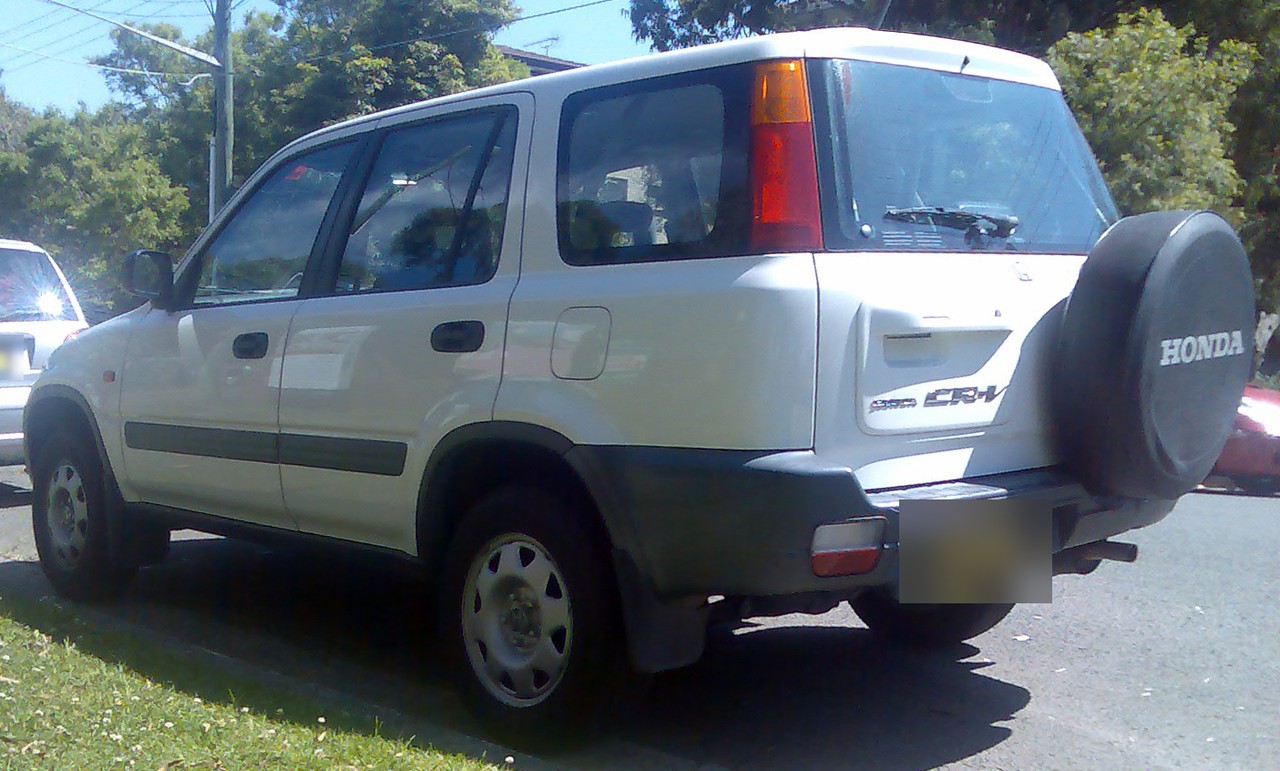
Honda CR-V, 1999–2001 generation
Pictured: the 1999–2001 generation. OSX, Public domain · Wikimedia Commons

Recalls

Recall campaignNHTSA 20V027000

Air bags: frontal: driver side: inflator module

Component
Air bags: frontal: driver side: inflator module
Manufacturer
Honda (American Honda Motor Co.)
Vehicles affected
875,966
Reported to NHTSA
2020-01-17
Owners notified
2020-10-01

Defect description

Honda (American Honda Motor Co.) is recalling certain 2001-2002 Acura 3.2CL, 2000-2003 Acura 3.5RL, 2000-2001 Acura 3.2TL, Honda CR-V and Honda Odyssey, 2001-2002 Acura MDX and 2000 Accord Coupe, Accord Sedan, Civic Coupe, and Civic Sedan vehicles. These vehicles may have received a replacement driver frontal air bag module as part of a vehicle repair. Due to a manufacturing issue, the replacement NADI inflator may absorb moisture, causing the inflator to rupture or the air bag cushion to underinflate.

Safety risk

In the event of a crash necessitating air bag deployment, an inflator rupture may result in metal fragments striking the driver or other occupants. An underinflated air bag cushion may not properly protect the occupant. These scenarios increase the risk of serious injury or death.

Manufacturer remedy

Honda will notify owners, and dealers will inspect the air bags in the vehicles, replacing the driver frontal air bag inflator with an inflator of a different design, as necessary, free of charge. The recall began October 1, 2020. Owners may contact American Honda's Customer Support & Campaign Center at 1-888-234-2138.

Recall campaignNHTSA 20V026000

Air bags: frontal: driver side: inflator module

Component
Air bags: frontal: driver side: inflator module
Manufacturer
Honda (American Honda Motor Co.)
Vehicles affected
1,439,841
Reported to NHTSA
2020-01-17
Owners notified
2020-10-01

Defect description

Honda (American Honda Motor Co.) is recalling certain 1998 Acura 2.2CL, 1998-1999 Acura 2.3CL, 1998-1999 Acura 3.0CL, 2001 Acura 3.2CL and Acura MDX, 1998-2000 Honda Accord Coupe, Accord Sedan, Civic Sedan, Odyssey and Acura 3.5RL, 1999-2000 Acura 3.2TL, 1996-2000 Civic Coupe, 1997-2000 CR-V, 1997-1998 EV Plus, and 1998-1999 Isuzu Oasis vehicles. These vehicles were equipped with Non-Azide Driver air bag Inflators (NADI) and do not contain phase stabilized ammonium nitrate (PSAN) propellant. Due to a manufacturing issue, the NADI inflators may absorb moisture, causing the inflators to rupture or the air bag cushion to underinflate.

Safety risk

In the event of a crash necessitating air bag deployment, an inflator rupture may result in metal fragments striking the driver or other occupants. An underinflated air bag cushion may not properly protect the occupant. These scenarios increase the risk of serious injury or death.

Manufacturer remedy

Honda will notify owners, and dealers will inspect the driver frontal air bag inflator, and replace it if necessary, with an inflator of a different design, free of charge. The recall began October 1, 2020. Owners may contact American Honda's Customer Support & Campaign Center at 1-888-234-2138 or Isuzu customer service at 1-800-255-6727.

Owner complaints

A complaint is one person's report to a federal agency. It is not a finding.

ComponentComplaintsMedian mileage
Air bags40—
Tires1175,000 mi
Electrical system6182,000 mi
Engine and engine cooling: engine670,000 mi
Unknown or other6137,000 mi
Engine and engine cooling5100,000 mi
Power train: automatic transmission586,036 mi
Suspension496,000 mi
Air bags: frontal3—
Seat belts318,500 mi
Seat belts: front: buckle assembly3—
Structure: body3100,000 mi
Tires: tread/belt345,000 mi
Vehicle speed control3—
Electrical system: ignition2117,580 mi
Electrical system: ignition: module267,400 mi
Electrical system: ignition: switch233,000 mi
Electrical system: wiring: interior/under dash2—
Engine292,845 mi
Engine and engine cooling: cooling system: radiator assembly250,000 mi
Exterior lighting: headlights225,000 mi
Latches/locks/linkages2100,000 mi
Power train2117,000 mi
Power train: manual transmission217,000 mi
Power train: transfer case (4-wheel drive)2—
Structure233,000 mi
Structure: frame and members2—
Electrical system: instrument panel: speedometer/odometer1371,896 mi
Engine and engine cooling: exhaust system188,000 mi
Engine and engine cooling: exhaust system: emission control1169,000 mi
Engine and engine cooling: exhaust system: manifold/header/muffler/tail pipe1184,000 mi
Equipment: appliance: air conditioner1—
Equipment: mechanical: accessory scissor/screw/bottle jack/lift145,000 mi
Exterior lighting1137,000 mi
Latches/locks/linkages: doors: latch1—
Power train: automatic transmission: control module (TCM/PCM/TECM)1—
Power train: automatic transmission: lever and linkage: column shift132,300 mi
Power train: driveline133,000 mi
Power train: driveline: differential unit1112,000 mi
Power train: driveline: driveshaft1—
Seat belts: front: retractor1—
Seat belts: rear/other1—
Seats: mid/rear assembly160,000 mi
Service brakes1—
Service brakes, hydraulic: antilock/traction control/electronic limited slip1—
Steering: column locking: anti-theft device1117,580 mi
Structure: body: bumpers1—
Structure: body: hatchback/liftgate: hinge and attachments159,000 mi
Structure: body: roof and pillars1—
Structure: body: tailgate133,000 mi
Structure: body: tailgate: hinge and attachments1120,000 mi
Tires: sidewall1—
Vehicle speed control: accelerator pedal1—
Visibility: power window devices and controls1—
Visibility: windshield136,200 mi
Wheels1192,000 mi

The 1999 model has roughly the same number of complaints as this one. The 2001 model has roughly the same number of complaints as this one. These figures reflect raw complaint counts, not failure rates. Higher-selling model years naturally receive more complaints.

Other Honda CR-V model years

All Honda CR-V recalls by year

Safety recall repairs are provided free of charge by franchised dealers, regardless of vehicle age or mileage. This page displays aggregated data for the model year. To check recall status for a specific vehicle, search its VIN at nhtsa.gov.